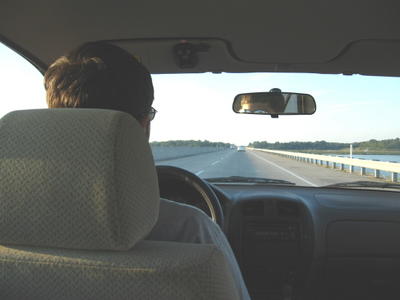
My company decided that my office will be closed for the foreseeable future and I am now a work-at-home employee. The official line is that this is permanent and not going to change at the end of the COVID-19 pandemic, but I know that things can still change in a heartbeat.
I'm torn on this news. Being a severe introvert, this has been a bit of a fantasy for me, and it has worked well for the month-and-a-half that I have been doing this. It has been great having more opportunity to eat with and interact with the family while still being on top of my work. I will miss my co-workers, though. It also introduces some instability to my job. Will my employer continue to consider me or the rest of the people in my office as important when no one physically sees me working, and will this make me more of a layoff target in the future? It can't help.
I am among those who think this is a harbinger of things to come in business in general. It often doesn't make sense to pay to lease and maintain business facilities when employees can be just as productive from home. This pandemic is going to be an excuse for a lot of businesses to drop some facilities expenses from their books.
There are things that are important about an office, but I don't think they're always the things that management says are important about having an office. The rationale that I normally hear is that an office makes it easier for workers to collaborate. That may be somewhat true, but technology has come a long way in this regard. The bigger issues I see are less opportunity to build rapport on a team and more difficulty in training new employees. I don't have a good, non-buzzword solution for these things, but if someone does solve those issues a lot more business will be removed from traditional offices.
I do think this is going to lead to a fundamental change in much of society, and could be the beginning of a nightmare scenario for extroverts. Will this drive extroverted people out of typical office jobs into fields where they can interact more with other people? I know that finance, accounting, and technical fields already have a reputation for being a bit anti-social. Will marketing, HR, legal, and PR follow suit as people in those fields work more from home?
Sunday, May 03, 2020


Saturday, January 25, 2020
genetic testing
I just rewatched Gattaca for the first time since the 90s last night. For those unaware, the premise is that in the near future children who are not genetically engineered are discriminated as such, and cannot get the same opportunities as those who are genetically engineered.
This calls to mind a concern I have had, and how it affects some minor decisions. If given the opportunity I probably would not have genetic testing done, and I probably wouldn't get screening for diseases which lack a cure, such as Alzheimers. The reason is not because I am morally or intellectually opposed to such testing. The reason is that I think it will eventually mess up my insurance.
In Gattaca, the protagonist experiences discrimination in his desired profession of astronaut because his health makes him a risk to a mission. He is instead only able to get a job cleaning offices. The plot of the movie involves how he gets around the system in his attempt to get into the space program.
I don't fear my genetics or the results of a test would eliminate me from jobs like the main character in this movie, though I am already medically eliminated from a few. I am alert to the possibility that one day such a test could cause me to be unable to get health insurance or life insurance, however.
Right now in the U.S. it is not legal for health insurance companies to refuse to sell insurance to someone based on pre-existing conditions. That may or may not be reversed in the future, as there is a lawsuit going through the federal court system which may do just that. This is something that I always need to keep in mind when getting tested.
Furthermore, the pre-existing condition limitation also does not apply to companies who sell life insurance. If I were to have a test done that showed I had a mutation that made me a bit more likely to have a stroke or get Alzheimers, I would be obligated to share this information with a company I was planning to by life insurance from, and potentially get myself priced out of the life insurance market as a result, in the case that I decided to get additional life insurance to what I currently have.
Some would jump to the insurance company's defense and say that their job is just to provide a service that sets a price based upon a calculated risk. I am not casting blame, however. I am just saying that in the current environment, there is a potential motivation to not know everything about your health and genetics.
Policy makers should keep in mind that systems which allow for filtering on pre-existing conditions or genetic conditions motivate some people like me to simply avoid pursuing that data. There has to be a better way, so that willful ignorance isn't a winning strategy.
This calls to mind a concern I have had, and how it affects some minor decisions. If given the opportunity I probably would not have genetic testing done, and I probably wouldn't get screening for diseases which lack a cure, such as Alzheimers. The reason is not because I am morally or intellectually opposed to such testing. The reason is that I think it will eventually mess up my insurance.
In Gattaca, the protagonist experiences discrimination in his desired profession of astronaut because his health makes him a risk to a mission. He is instead only able to get a job cleaning offices. The plot of the movie involves how he gets around the system in his attempt to get into the space program.
I don't fear my genetics or the results of a test would eliminate me from jobs like the main character in this movie, though I am already medically eliminated from a few. I am alert to the possibility that one day such a test could cause me to be unable to get health insurance or life insurance, however.
Right now in the U.S. it is not legal for health insurance companies to refuse to sell insurance to someone based on pre-existing conditions. That may or may not be reversed in the future, as there is a lawsuit going through the federal court system which may do just that. This is something that I always need to keep in mind when getting tested.
Furthermore, the pre-existing condition limitation also does not apply to companies who sell life insurance. If I were to have a test done that showed I had a mutation that made me a bit more likely to have a stroke or get Alzheimers, I would be obligated to share this information with a company I was planning to by life insurance from, and potentially get myself priced out of the life insurance market as a result, in the case that I decided to get additional life insurance to what I currently have.
Some would jump to the insurance company's defense and say that their job is just to provide a service that sets a price based upon a calculated risk. I am not casting blame, however. I am just saying that in the current environment, there is a potential motivation to not know everything about your health and genetics.
Policy makers should keep in mind that systems which allow for filtering on pre-existing conditions or genetic conditions motivate some people like me to simply avoid pursuing that data. There has to be a better way, so that willful ignorance isn't a winning strategy.
Monday, October 21, 2019
talking politics with kids
In the past few years I have worked with the children's ministry in our church more than in previous years. One thing that I have noticed is that there are specific people who insert their political beliefs into their lessons. In at least one case this is because the person's political and religious identities are tightly linked, so that's where his mind goes when teaching about a virtue or a vice.
There isn't a great line regarding what is inappropriate to discuss with other people's children, but as I progress as a parent I am starting to believe that any political discussion with elementary-aged children who are not your kids or grand kids is unwise. Certainly, teachers should teach history, government, civics, etc. However, that should be the limit. The downsides of pushing your political worldview on someone else's kid are stronger than the positives.
Much of my opinion comes from the fact that adults don't usually have the requisite humility to discuss political issue appropriately even with other adults. Most political discussion involves first characterizing people who disagree with you as bad or stupid rather than having valid concerns. This is wrong, but it is typical. Speaking to kids like this only teaches them to approach things in a similar way.
Furthermore, I'm shocked that adults think that kids' parents might want someone else teaching them their political worldviews. Even in an environment where most people believe a certain way there are some who will not. It is more important rather than less important not to isolate those kids and make them feel like they don't belong.
I remember people talking politics to me and around me as a kid, and it did not occur to me at the time how inappropriate those conversations were. I've since had several moments as an adult where I realized, "Hey, that adult shouldn't have made the child me believe that conspiracy theory," or "Wow, now that I can articulate what was happening at the time I can't believe that adult slandered that politician to me that way."
For what it's worth, in my experience people with both right-leaning and left-leaning viewpoints felt the freedom to push their opinions. So, this is an adult thing rather than a right or left thing.
My kids are not as interested in politics as I was at their ages, however I do have an approach I take when a political topic is raised. I always emphasize that when we have a specific political belief that does not mean that people who disagree with us are bad or stupid. I am willing to tell them what I think of a specific issue if they want to discuss it, though.
For reference, most of the political questions I've fielded in the last few years have fallen in one of two buckets.
- "I've heard a lot of people say that President Trump is mean. Is that true?"
- "A lot of people don't like President Trump. Why is that?"
Sometimes I wish I was raising kids in a different era. I'd much rather be discussing political issues than politicians' tactics and dispositions.
Saturday, October 12, 2019
age
Over the summer I turned forty. I genuinely don't feel forty. I think that's going to be a theme every time I turn a new age. Where'd my twenties go? I can't be out of my thirties already! I'm sure that fifty is the new twenty-five!
I've had a lot of observations about getting older, but three have been on my mind lately.
First, I've been weirded out by the number of times I've seen someone my age or younger who my mind has registered as old. Just in the past day I saw someone wearing a shirt declaring "Established in 1979," who I did not think looked my age, even though he was clearly born in the same year. This is very much vanity from someone who likes to think he isn't vain. "I can't possibly look that age, right?!"
Second, while I see more overall growth in my life, it feels slower. I mean this in the sense that old dogs can learn new tricks, and can possibly learn them better, but it takes longer than when the dog was younger. When I look at the things I've learned and improved on in the last five years it's a numerically shorter list than from the five year period from when I turned fifteen to when I turned twenty. I feel like a have a better grasp on that shorter list and that it includes a lot more soft skills, though.
I don't know if this is something anyone else experiences, but I'm not intimidated to learn a lot of things that used to intimidate me. However, there is a real limit that I see to how quickly I can progress on a given skill-set or cache of knowledge.
Third, I have also noticed that in some respects age is a minor super power in the same way that working the same job for years on end is. Some people are naturally wise and see how certain bad choices will go badly. Some people are just old enough to have seen this rodeo before and know from experience that certain bad choices will go badly. It's odd to see someone do or say something that I might have thought was a good idea years ago, but to immediately know what a mistake it was. Some of that is just that it's easy to see things as a super power when you used to be thoroughly clueless. I'd like to think that age does bring a level of maturity as well, though.
Here's to another decade which will undoubtedly conclude with my flabbergasted exclamation of, "Where did my forties go!"
I've had a lot of observations about getting older, but three have been on my mind lately.
First, I've been weirded out by the number of times I've seen someone my age or younger who my mind has registered as old. Just in the past day I saw someone wearing a shirt declaring "Established in 1979," who I did not think looked my age, even though he was clearly born in the same year. This is very much vanity from someone who likes to think he isn't vain. "I can't possibly look that age, right?!"
Second, while I see more overall growth in my life, it feels slower. I mean this in the sense that old dogs can learn new tricks, and can possibly learn them better, but it takes longer than when the dog was younger. When I look at the things I've learned and improved on in the last five years it's a numerically shorter list than from the five year period from when I turned fifteen to when I turned twenty. I feel like a have a better grasp on that shorter list and that it includes a lot more soft skills, though.
I don't know if this is something anyone else experiences, but I'm not intimidated to learn a lot of things that used to intimidate me. However, there is a real limit that I see to how quickly I can progress on a given skill-set or cache of knowledge.
Third, I have also noticed that in some respects age is a minor super power in the same way that working the same job for years on end is. Some people are naturally wise and see how certain bad choices will go badly. Some people are just old enough to have seen this rodeo before and know from experience that certain bad choices will go badly. It's odd to see someone do or say something that I might have thought was a good idea years ago, but to immediately know what a mistake it was. Some of that is just that it's easy to see things as a super power when you used to be thoroughly clueless. I'd like to think that age does bring a level of maturity as well, though.
Here's to another decade which will undoubtedly conclude with my flabbergasted exclamation of, "Where did my forties go!"
Thursday, June 06, 2019
d day

Today is the 75th anniversary of D-Day.
One of the most jarring scenes in any movie for me is in Saving Private Ryan. The camera takes the view of a soldier toward the back of a Higgins boat, the nerves of the young men in the boat are worked up, the front of the boat opens up for them to get out and approach to the beach, and the entire boat of soldiers falls victim to machine gun fire. As an uninformed civilian, that scene sums up my view of the sacrifice of the D-Day invasion. So many men who certainly would have preferred to be taking a different role than that on that day were forced into a meat grinder out of necessity. Some survived and some did not. However, for all of their efforts, Europe and the world are better places today.
There are a lot of battles through history that overwhelm the mind when I try to imagine myself in the shoes of someone who was there. I don't know that any battle in history compares to this one in my mind, though.
Today, my mood is thankfulness for those who have served and sacrificed for the freedoms. They're a privilege purchased at a high cost.
Tuesday, April 30, 2019
food after effects
When we visit my in-laws the kids love going to their local Godfather's Pizza. They enjoy the food, and they enjoy the arcade area in that Godfather's. So, we always have to make a trip there, which we did this past weekend as well. This reminded me of something I have been noticing over the past couple of years.
Ever since I have been eating healthier I have noticed that I can seriously tell when I don't eat healthy. It makes sense that eating healthier makes your digestive system feel and operate better, but the surprise to me is how much eating unhealthy makes me feel generally achy, inflamed, and lethargic. Weird things happen like my tongue feels swollen, my legs don't seem to want to move, and my feet get a little tingly. None of these effects are extreme, but they still pop out to me. I'm now not sure if this is something that I've experienced my whole life and just never identified the pattern, or if it is something that is more noticeable since I am getting older.
As someone who doesn't normally eat breakfast, I've even noticed that if I do eat something unhealthy in the morning I feel worse than if I don't eat anything. My stomach has always been a bit queasy in the morning anyway, but having something with a bit too much sugar also makes me feel generally achy and distracted for a short stretch of time afterward.
The positive from this is that it does provide extra motivation to eat right. However, part of how I've stuck with eating healthy is planning out my cheat meals and snacks, and enjoying them to the fullest. Understanding the repercussions may take away some of that enjoyment.
Am I the only one who has noticed this? How do you feel after you've had a healthy or unhealthy meal?
Ever since I have been eating healthier I have noticed that I can seriously tell when I don't eat healthy. It makes sense that eating healthier makes your digestive system feel and operate better, but the surprise to me is how much eating unhealthy makes me feel generally achy, inflamed, and lethargic. Weird things happen like my tongue feels swollen, my legs don't seem to want to move, and my feet get a little tingly. None of these effects are extreme, but they still pop out to me. I'm now not sure if this is something that I've experienced my whole life and just never identified the pattern, or if it is something that is more noticeable since I am getting older.
As someone who doesn't normally eat breakfast, I've even noticed that if I do eat something unhealthy in the morning I feel worse than if I don't eat anything. My stomach has always been a bit queasy in the morning anyway, but having something with a bit too much sugar also makes me feel generally achy and distracted for a short stretch of time afterward.
The positive from this is that it does provide extra motivation to eat right. However, part of how I've stuck with eating healthy is planning out my cheat meals and snacks, and enjoying them to the fullest. Understanding the repercussions may take away some of that enjoyment.
Am I the only one who has noticed this? How do you feel after you've had a healthy or unhealthy meal?
Tuesday, March 26, 2019
tree health
We have two elm trees in our front yard. Probably two-thirds of our neighborhood has them. Slowly, you see the trees disappear as they die out in each person's yard. It's an inevitability that ours will die as well one day.
This Sunday, as we were pulling into the driveway from church I noticed that the bark near the top of one of the trees looks different than I'm used to. I don't know what a diseased tree looks like, but I do know that elm trees are prone to disease.
So, for the last couple of days I have been thinking about whether I need to get it looked at and what it would cost to hire a crew to come cut down both of the trees, since it's only a matter of time. Today, I decided to Google what a diseased elm tree looks like. "Huh, that's not what our trees look like," I realized. "I wonder what that could be."
It's lichen. Lichen doesn't damage trees. I feel dumb, but relieved.
This Sunday, as we were pulling into the driveway from church I noticed that the bark near the top of one of the trees looks different than I'm used to. I don't know what a diseased tree looks like, but I do know that elm trees are prone to disease.
So, for the last couple of days I have been thinking about whether I need to get it looked at and what it would cost to hire a crew to come cut down both of the trees, since it's only a matter of time. Today, I decided to Google what a diseased elm tree looks like. "Huh, that's not what our trees look like," I realized. "I wonder what that could be."
It's lichen. Lichen doesn't damage trees. I feel dumb, but relieved.
Subscribe to:
Posts (Atom)