One of the things that most strongly shaped my childhood was that my parents were far more cautious than most other parents about the media that I consumed. There's good and bad to that, and I'm finding that I'm a relatively strict parent in that regard as well, but it has given me a different perspective on some of the modern reflections on former media coming out of the #MeToo movement.
Today, watching TV and movies that came out during my childhood in the eighties or nineties is a non-stop experience in thinking, "They wouldn't get away with that today." What has become weird to me is that some of the very issues that would have violated my conservative parents' rules as a kid have become unacceptable in today's society.
One example is The Breakfast Club. I didn't watch it when it came out in the 80s. I was only five-and-a-half in February 1985, after all. I did watch it for the first time almost exactly twelve years ago, though, and remember feeling it was a bit off even then. I remember thinking that I didn't like any of the three male character's arcs because the jock and the troubled teen didn't really learn that they needed to change anything about themselves, and the nerd simply got a justification for doing everyone else's project. Based on the content in the movie, I would never have been permitted to have watched it in my parents' home. Apparently, Molly Ringwald rewatched the movie recently with her daughter and had a similar experience, though more for #MeToo reasons.
In one odd one I remember that Friends was off-limits because of sexual themes. In more recent years I've seen analysis complaining about the jokes made at the expense of trans people. So, the complaints about that show have come from both sides.
It's also very likely that jokes I've made or things I've done in years past haven't aged well either. If so, it probably exposes wrongheadedness on my part more than anything else. So, if you've ever been offended by something I've said here because I've pushed that line, consider this my apology. It was done in ignorance, but that doesn't excuse it.
More than ever, the times they are a changing. Rightheadedness or wrongheadedness stays the same, though.
Thursday, June 21, 2018


Tuesday, June 12, 2018
fruits and vegetables
I know I have to be getting irritating to those around me all I talk about food nowadays, but the last year has represented a huge shift in how I think about food so it's frequently on my mind. Believe it or not, this is keeping my thoughts on the matter short.
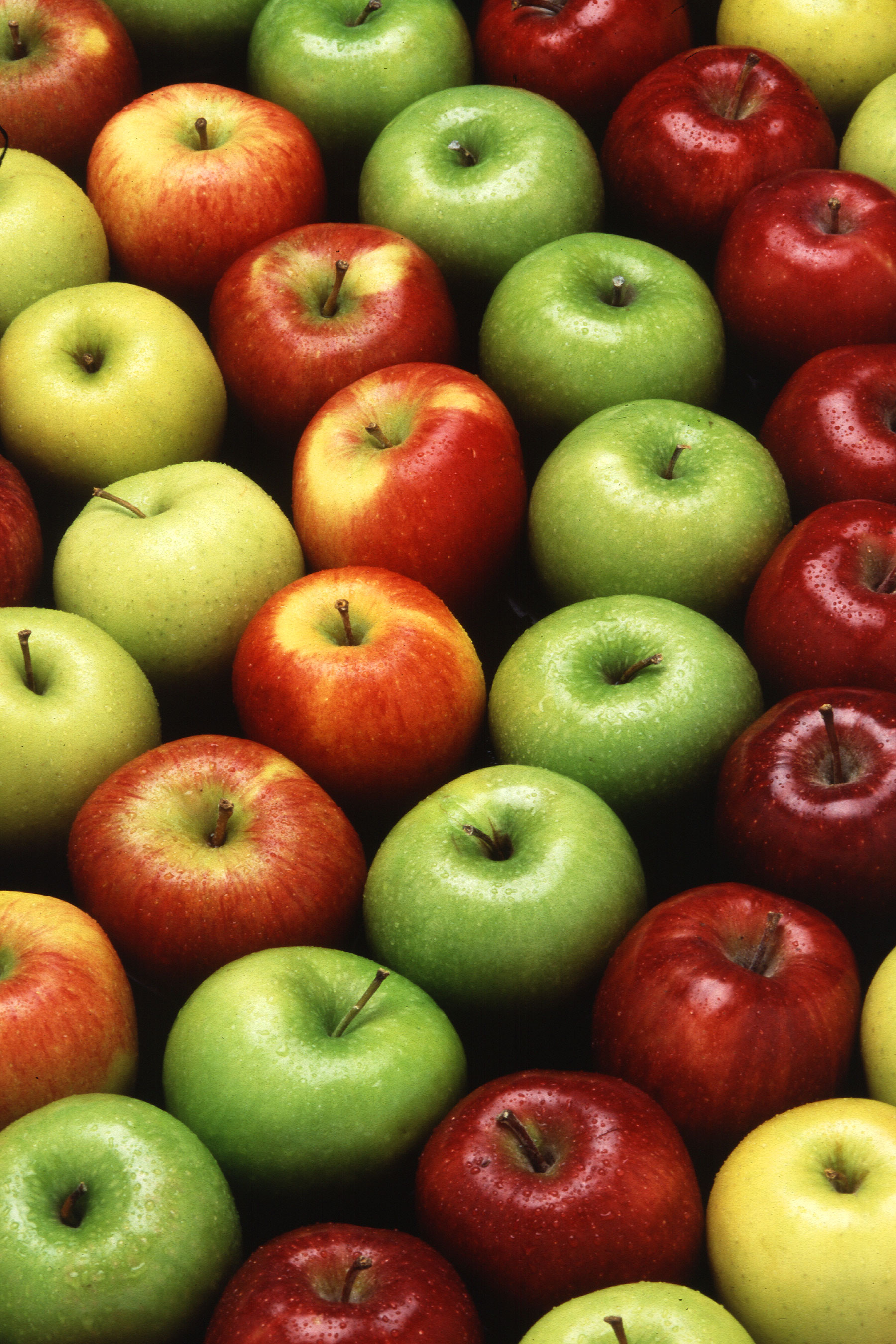 I have completely changed how I think about American healthcare system and the causes of disease and chronic health problems. When I talk about weight loss with other folks a lot of them comment about being hungry all of the time when they're on a diet. That was historically the primary thing that kept me from watching what I ate. I had that a little when I started watching what I eat, but once I started eating fruits and vegetables in significant quantities to where I was getting 30 to 40 grams of fiber a day that was rarely a problem. The only days that I get hungry are when I eat too much red meat, breads, or sweets and run out of calories by the end of the day.
Because of my experience, I'm realizing that one major factor that is driving health issues in the United States is simply access to fresh produce. When I visited a General Dollar near my in-laws a few months ago I was struck by two things. First, food there is very reasonably priced. Second, there is very little produce. If that was my nearest shopping option and my transportation was limited I would have to go out of my way to get the amount of fiber that I now try to consume. I'd probably have to mostly eat beans. Without knowing any better, which I didn't until very recently, I am certain my health would be negatively affected, and I wouldn't really know why other that to blame myself for snacking too much or not exercising enough.
I don't know what the solution to this problem is. Some people say that national policy should be changed to encourage farmers to grow healthier crops, or focus less on red meat production, or whatever. There are a host of potential consequences from that, and there is debate as to how effective it would be anyway, so I don't know what to think at this time. I suspect that agriculture policy could be tweaked to improve people's health, though.
I have also noticed that some fast food places have made it easier than others to get a low calorie option from their menu than others.While healthy fast food is an oxymoron, I have noticed some fast food places providing reasonable alternatives to fries in their combo meals. However, if your primary local options are Burger King and KFC, it's going to be difficult to stay on a calorie budget with a combo meal.
I'll just conclude with the thought that I'm realizing how extremely fortunate I am. I have been able to adjust my diet in a reasonably affordable way because I have access to healthy foods. I also don't feel like I'm missing out on anything, and I've grown to really enjoy many of snack foods I now have available at home. There are a lot of people in food deserts who can't afford healthy, satisfying foods.
 I have completely changed how I think about American healthcare system and the causes of disease and chronic health problems. When I talk about weight loss with other folks a lot of them comment about being hungry all of the time when they're on a diet. That was historically the primary thing that kept me from watching what I ate. I had that a little when I started watching what I eat, but once I started eating fruits and vegetables in significant quantities to where I was getting 30 to 40 grams of fiber a day that was rarely a problem. The only days that I get hungry are when I eat too much red meat, breads, or sweets and run out of calories by the end of the day.
Because of my experience, I'm realizing that one major factor that is driving health issues in the United States is simply access to fresh produce. When I visited a General Dollar near my in-laws a few months ago I was struck by two things. First, food there is very reasonably priced. Second, there is very little produce. If that was my nearest shopping option and my transportation was limited I would have to go out of my way to get the amount of fiber that I now try to consume. I'd probably have to mostly eat beans. Without knowing any better, which I didn't until very recently, I am certain my health would be negatively affected, and I wouldn't really know why other that to blame myself for snacking too much or not exercising enough.
I don't know what the solution to this problem is. Some people say that national policy should be changed to encourage farmers to grow healthier crops, or focus less on red meat production, or whatever. There are a host of potential consequences from that, and there is debate as to how effective it would be anyway, so I don't know what to think at this time. I suspect that agriculture policy could be tweaked to improve people's health, though.
I have also noticed that some fast food places have made it easier than others to get a low calorie option from their menu than others.While healthy fast food is an oxymoron, I have noticed some fast food places providing reasonable alternatives to fries in their combo meals. However, if your primary local options are Burger King and KFC, it's going to be difficult to stay on a calorie budget with a combo meal.
I'll just conclude with the thought that I'm realizing how extremely fortunate I am. I have been able to adjust my diet in a reasonably affordable way because I have access to healthy foods. I also don't feel like I'm missing out on anything, and I've grown to really enjoy many of snack foods I now have available at home. There are a lot of people in food deserts who can't afford healthy, satisfying foods.
Saturday, June 02, 2018
a parable about spring
After the creation and the fall of man God decided to illustrate the significance of His creation to the archangel Gabriel.
"Gabriel," God opened, "consider the seasons that I have bestowed on the earth I have given mankind. The variation points to My unsurpassed creativity and care for the aesthetic. The cycles of life points to my ultimate plan for mankind."
"I see your wisdom and forethought in it," acknowledged Gabriel.
"Think about spring in particular," continued the Lord. "The skies are populated by birds. The streams and rivers swell and are filled by fish and other aquatic life. Grass, flowers, and tress bud and spring to life. What appeared to be dead only weeks prior is vibrant with life. Animals of from the least to the greatest all multiply in spring."
"Spring does remind one of new life," agreed Gabriel.
"And the colors! Where winter offered overcast grays, spring brings the bold yellows, purples, and blues of newly blooming flowers. It brings verdant greens to the grasses and the trees. Even the thunderstorms offer deep royal blues to the landscape."
"Spring is indeed a beautiful season," Gabriel opined.
"Think also of the food," reminded God. "Where winter offered little hope for sustenance, spring is a hint at what is to come. Crops are planted. Fruit trees bud. Animals are fattened. Mankind is reminded of My provision and omnipotence."
"Humanity would be hopeless without your provision," Gabriel observed. "This does make me wonder about something, though."
"Ask your question," God allowed.
"Well," Gabriel started, "if you have provided mankind with images of life, beauty, and provision all within the span of one season, isn't it possible that mankind will prefer earth to heaven? Aren't you concerned that they will not feel a need for heaven if earth is too perfect, even if only for one season?"
God looked at Gabriel with an omniscient smile and responded, "Let me tell you about another of my creations: ragweed."
"Gabriel," God opened, "consider the seasons that I have bestowed on the earth I have given mankind. The variation points to My unsurpassed creativity and care for the aesthetic. The cycles of life points to my ultimate plan for mankind."
"I see your wisdom and forethought in it," acknowledged Gabriel.
"Think about spring in particular," continued the Lord. "The skies are populated by birds. The streams and rivers swell and are filled by fish and other aquatic life. Grass, flowers, and tress bud and spring to life. What appeared to be dead only weeks prior is vibrant with life. Animals of from the least to the greatest all multiply in spring."
"Spring does remind one of new life," agreed Gabriel.
"And the colors! Where winter offered overcast grays, spring brings the bold yellows, purples, and blues of newly blooming flowers. It brings verdant greens to the grasses and the trees. Even the thunderstorms offer deep royal blues to the landscape."
"Spring is indeed a beautiful season," Gabriel opined.
"Think also of the food," reminded God. "Where winter offered little hope for sustenance, spring is a hint at what is to come. Crops are planted. Fruit trees bud. Animals are fattened. Mankind is reminded of My provision and omnipotence."
"Humanity would be hopeless without your provision," Gabriel observed. "This does make me wonder about something, though."
"Ask your question," God allowed.
"Well," Gabriel started, "if you have provided mankind with images of life, beauty, and provision all within the span of one season, isn't it possible that mankind will prefer earth to heaven? Aren't you concerned that they will not feel a need for heaven if earth is too perfect, even if only for one season?"
God looked at Gabriel with an omniscient smile and responded, "Let me tell you about another of my creations: ragweed."
Thursday, May 17, 2018
soft drinks
It's weird to me that, as I am shifting away from drinking soft drinks, I am seeing that I am not the only one doing so.
Growing up, my family drank some soft drinks, but limited our intake far more than other families around us. I have a distinct memory of going to a restaurant, our whole family ordering milk, and the waitress commenting how we must be a health-nut family. I was so embarrassed because I felt that drinking soft drinks was what normal or even cool people did. At a younger age I understood that soft drinks were unhealthy, but I did not see any correlation between the people who drank soft drinks and their health. The athletic kids didn't avoid sugary drinks so there was a disconnect between what I "knew" and what I saw.
Through college and early adulthood I didn't binge on soft drinks, but I didn't hold back either. They were included in the lunch plan in the school cafeteria, they were a cheap treat at home, and I could get them free at work. In the years after college I gained quite a bit of weight, but I started very skinny and my vitals on my doctor visits in my twenties were always fine. So, why not get refills on my Coke or Pepsi when out to dinner?
I've already gone through a phase where I limited my soft drinks but still drank more than I should. I also went through a phase where I drank Diet Pepsi for a while. I never thought that I would be in my current state, though, where I might have a can of some soft drink every two weeks to a month. We don't even buy soft drinks in our house any more unless we're having company, which an earlier version of myself would have found insane.
In our office we get drinks stocked by what people want and actually drink. We used to fly through Coke, Pepsi, and root beer, but people in the office don't drink it in any volume any more. As of late this means that we get a lot of Le Croix and Diet Mt. Dew. I don't drink a lot of the La Croix and I don't even like regular Mt. Dew (let alone the diet version), however I have zero complaints about what is stocked because I wouldn't drink the regular soft drinks even if they were available.
These trends are occurring nationwide as well. Coke and Pepsi are relying more on their diet soft drinks and other alternatives to their traditional soft drinks to drive profit. This is odd to me because I grew up thinking of drinking soft drinks as the normal and cool thing to do, and now it's more cool to order flavored seltzer.
Growing up, my family drank some soft drinks, but limited our intake far more than other families around us. I have a distinct memory of going to a restaurant, our whole family ordering milk, and the waitress commenting how we must be a health-nut family. I was so embarrassed because I felt that drinking soft drinks was what normal or even cool people did. At a younger age I understood that soft drinks were unhealthy, but I did not see any correlation between the people who drank soft drinks and their health. The athletic kids didn't avoid sugary drinks so there was a disconnect between what I "knew" and what I saw.
Through college and early adulthood I didn't binge on soft drinks, but I didn't hold back either. They were included in the lunch plan in the school cafeteria, they were a cheap treat at home, and I could get them free at work. In the years after college I gained quite a bit of weight, but I started very skinny and my vitals on my doctor visits in my twenties were always fine. So, why not get refills on my Coke or Pepsi when out to dinner?
I've already gone through a phase where I limited my soft drinks but still drank more than I should. I also went through a phase where I drank Diet Pepsi for a while. I never thought that I would be in my current state, though, where I might have a can of some soft drink every two weeks to a month. We don't even buy soft drinks in our house any more unless we're having company, which an earlier version of myself would have found insane.
In our office we get drinks stocked by what people want and actually drink. We used to fly through Coke, Pepsi, and root beer, but people in the office don't drink it in any volume any more. As of late this means that we get a lot of Le Croix and Diet Mt. Dew. I don't drink a lot of the La Croix and I don't even like regular Mt. Dew (let alone the diet version), however I have zero complaints about what is stocked because I wouldn't drink the regular soft drinks even if they were available.
These trends are occurring nationwide as well. Coke and Pepsi are relying more on their diet soft drinks and other alternatives to their traditional soft drinks to drive profit. This is odd to me because I grew up thinking of drinking soft drinks as the normal and cool thing to do, and now it's more cool to order flavored seltzer.
All of this is probably a good thing. Seltzer has to be more healthy than cola. I'm just struck by how things change for me and for society at large, over something as pervasive as what we regularly drink.
Wednesday, May 09, 2018
unthinkable
I'm frequently guarded about the standards I use to determine whether a movie is appropriate to watch or not. Most things that make a movie appropriate or inappropriate are inherently subjective. So, if I refuse to watch something that doesn't mean that I condemn others who watch it. Likewise, I don't want others to condemn me for deeming something acceptable that they personally find inappropriate to watch.
 On-screen violence is one issue that a lot of people find inappropriate. This is difficult because while I genuinely dislike seeing violence in movies--I never watch a movie excited to see realistic violence--it is often necessary to make the point of the movie. One oft-cited example is The Passion of the Christ. Another example that I want to consider here today because it touches on a topic currently in the news is a movie called Unthinkable.
The reason for my lead-in to this is that I'm hesitant to acknowledge that I've watched Unthinkable or to recommend it to others because it's violent in a genuinely disturbing way. Much like The Passion of the Christ, it is not enjoyable to watch, but it is important in the issue and questions it presents. I have no desire to re-watch either of these movies, though I consider both to be extremely important works that have affected me in a positive way.
The protagonist in the movie is an FBI agent played by Carrie-Anne Moss, and she is told to oversee the work of an interrogator played by Samuel L. Jackson. He's attempting to extract information from a terrorist who claims to have planted bombs in major cities. We're meant to work through the moral trade-offs involved with enhanced interrogation through the decisions that Moss' character is forced to make. Throughout the movie, she constantly has to decide whether to allow the torture we're witnessing to continue and escalate further or potentially allow thousands to millions to die in a nuclear incident. Some of the questions forced on the audience follow.
The reason I "like" (not enjoy) this movie is that I didn't believe it forced the audience to believe one way or the other on torture. Where 24* or Zero Dark Thirty* may extol the effectiveness of torture, or where Rendition* may present it as something that will be abused, my take on Unthinkable was that the movie intended for audiences to simply understand the trade-off for taking either a pro- or anti-torture position**. I didn't finish the movie believing that being for or against torture was an easy choice. I finished the movie believing that every option in such situations is a bad option, and the real question is determine which the least bad option is***.
So, I'm sort of recommending the movie without recommending it in the same way I would do so with The Passion of the Christ. If you're not up to watching a violent and disturbing movie don't watch this. If you could stomach Mel Gibson's movie, though, and want to see a movie that handles the subject of torture against terrorism in an unflinching and honest light, it is worth a consideration.
* I actually have only watched a little bit of 24, and none of Zero Dark Thirty or Rendition. You can discredit my opinion related to those movies if you like, since I'm only going off second-hand information.
** Full disclosure, I have been anti-torture for a few years now after having believed for a while that it was an acceptable trade-off to stopping acts of terrorism. This being said, I am genuinely torn on some of the moral conundrums certain scenarios present.
*** I do also think I should acknowledge that one criticism I've seen of the movie is that it may actually be slanted pro-torture. There is real dispute as to whether torture is effective in getting accurate information from individuals, and while this is somewhat addressed in the movie, the audience may still walk away thinking that torture is more effective than it is.
On-screen violence is one issue that a lot of people find inappropriate. This is difficult because while I genuinely dislike seeing violence in movies--I never watch a movie excited to see realistic violence--it is often necessary to make the point of the movie. One oft-cited example is The Passion of the Christ. Another example that I want to consider here today because it touches on a topic currently in the news is a movie called Unthinkable.The reason for my lead-in to this is that I'm hesitant to acknowledge that I've watched Unthinkable or to recommend it to others because it's violent in a genuinely disturbing way. Much like The Passion of the Christ, it is not enjoyable to watch, but it is important in the issue and questions it presents. I have no desire to re-watch either of these movies, though I consider both to be extremely important works that have affected me in a positive way.
The protagonist in the movie is an FBI agent played by Carrie-Anne Moss, and she is told to oversee the work of an interrogator played by Samuel L. Jackson. He's attempting to extract information from a terrorist who claims to have planted bombs in major cities. We're meant to work through the moral trade-offs involved with enhanced interrogation through the decisions that Moss' character is forced to make. Throughout the movie, she constantly has to decide whether to allow the torture we're witnessing to continue and escalate further or potentially allow thousands to millions to die in a nuclear incident. Some of the questions forced on the audience follow.
- Is there a way to weigh the moral values of torture against the life that would be lost without it?
- Is a little bit of torture okay if it saves lives?
- Is more extreme torture okay if it saves lives?
- Is there ever a point where the actions necessary to save lives are so unthinkable (hence the movie's name) that it's preferable not to take them?
- *Spoiler (highlight to reveal)* Is it acceptable to torture an innocent if that could save lives? *Spoiler*
The reason I "like" (not enjoy) this movie is that I didn't believe it forced the audience to believe one way or the other on torture. Where 24* or Zero Dark Thirty* may extol the effectiveness of torture, or where Rendition* may present it as something that will be abused, my take on Unthinkable was that the movie intended for audiences to simply understand the trade-off for taking either a pro- or anti-torture position**. I didn't finish the movie believing that being for or against torture was an easy choice. I finished the movie believing that every option in such situations is a bad option, and the real question is determine which the least bad option is***.
So, I'm sort of recommending the movie without recommending it in the same way I would do so with The Passion of the Christ. If you're not up to watching a violent and disturbing movie don't watch this. If you could stomach Mel Gibson's movie, though, and want to see a movie that handles the subject of torture against terrorism in an unflinching and honest light, it is worth a consideration.
* I actually have only watched a little bit of 24, and none of Zero Dark Thirty or Rendition. You can discredit my opinion related to those movies if you like, since I'm only going off second-hand information.
** Full disclosure, I have been anti-torture for a few years now after having believed for a while that it was an acceptable trade-off to stopping acts of terrorism. This being said, I am genuinely torn on some of the moral conundrums certain scenarios present.
*** I do also think I should acknowledge that one criticism I've seen of the movie is that it may actually be slanted pro-torture. There is real dispute as to whether torture is effective in getting accurate information from individuals, and while this is somewhat addressed in the movie, the audience may still walk away thinking that torture is more effective than it is.
Tuesday, April 10, 2018
soccer

In the past few months I have become re-acquainted with soccer. I played when I was in early elementary, but have barely ever played since. Some people from our church formed a team on a co-ed, novice soccer league, and I decided I'd join. As with many sports, I've always assumed there is more to the sport than I understood, and I've learned that this is one of the few times that my assumptions were correct.
Through a short season of games I am working on improving my poor form in everything from kicking to running, and I'm learning how pathetic my endurance is, even with my recent bout of exercising. Enough others on our team are as new as I am that our team is objectively the worst-performing one in the league. However, winning really isn't everything. This is one of the most consistently fun things I've chosen to do in a long while. I really look forward to our Friday night games for little reason other than the fact that I enjoy playing sports.
I used to think that my interest in playing sports was directly tied to my being a very competitive person. Honestly, now that I am less competitive I enjoy playing them more. There is less pressure to do well, and I can focus on small accomplishments during the game rather than whether our team won. Every week I'm able to tally a few accomplishments I'm proud of to offset the embarrassing things I'm doing on the field.
Being on a losing team has also provided the opportunity for me to talk to our kids about being a good loser. I understand kids getting mad when they lose, but I have been able to point out to my son especially how everyone on our team is very happy after the game, even when we get trounced. It's one thing to say that keeping a good attitude when losing is important, but it's another thing to be able to illustrate the appropriate attitude and behavior.
Our team is still searching for that first win. Maybe when we get that I'll get a new burst of competitiveness. For now, I'm just enjoying the journey.
Monday, April 02, 2018
hero in my own story
I don't have many heroes. It's possible I don't have any heroes. It may be me avoiding being vulnerable, but I've found that placing people on a pedestal just guarantees that they're going to disappoint in some way later on because no one is perfect.
Even though I don't have heroes, and I don't explicitly think of myself as a hero, I think there's a strong tendency for men at least to think of themselves as the hero of their own life narrative. I know I want to. I suspect women are similar. I know that I want to think that every difficulty I confront is a heroic challenge, and everyone who causes me trouble is a remorseless villain. This just allows me to feel righteous when I take confrontational steps to do something for my own benefit.
Since I decided a few years ago that most people are living as the heroes of their own personal narratives, this has greatly reduced the animosity I feel for people who are rude, obnoxious, selfish, or otherwise unbearable. I don't enjoy them, but they are easier to tolerate. In their narrative they have convinced themselves that they are heroically confronting those who act in some unjust way toward them.
This is important in understanding how to deal with difficult people. If I want to affect their behavior I have to remove their justifications by reacting in a way that is not unjust in their narrative. If they're a sociopath or a psychopath I might not be able to do that. If they're a more typical human, just being genuinely empathetic usually ruins the hero narrative in their mind, because it's hard to think of someone as a villain if they're being empathetic.
One of the things that I have long disliked in stories that I couldn't articulate for the longest time were villains whose primary purpose was being evil for the sake of it. I am sure that even Hitler, Stalin, Mao, and Pol Pot convinced themselves that their actions were right and just. Even psychopaths seek to justify their actions, if only by defining the fulfillment of their desires as the primary justification for everything. To have a character characterized as being evil with no internal justification feels off.
This is also one thing that bugs me about many (not all) conspiracy theories. The theories are frequently more focused on casting a person or a group of people as a villain than they are at presenting a rational justification for what would really motivate the behavior in question.
Even though I don't have heroes, and I don't explicitly think of myself as a hero, I think there's a strong tendency for men at least to think of themselves as the hero of their own life narrative. I know I want to. I suspect women are similar. I know that I want to think that every difficulty I confront is a heroic challenge, and everyone who causes me trouble is a remorseless villain. This just allows me to feel righteous when I take confrontational steps to do something for my own benefit.
Since I decided a few years ago that most people are living as the heroes of their own personal narratives, this has greatly reduced the animosity I feel for people who are rude, obnoxious, selfish, or otherwise unbearable. I don't enjoy them, but they are easier to tolerate. In their narrative they have convinced themselves that they are heroically confronting those who act in some unjust way toward them.
This is important in understanding how to deal with difficult people. If I want to affect their behavior I have to remove their justifications by reacting in a way that is not unjust in their narrative. If they're a sociopath or a psychopath I might not be able to do that. If they're a more typical human, just being genuinely empathetic usually ruins the hero narrative in their mind, because it's hard to think of someone as a villain if they're being empathetic.
One of the things that I have long disliked in stories that I couldn't articulate for the longest time were villains whose primary purpose was being evil for the sake of it. I am sure that even Hitler, Stalin, Mao, and Pol Pot convinced themselves that their actions were right and just. Even psychopaths seek to justify their actions, if only by defining the fulfillment of their desires as the primary justification for everything. To have a character characterized as being evil with no internal justification feels off.
This is also one thing that bugs me about many (not all) conspiracy theories. The theories are frequently more focused on casting a person or a group of people as a villain than they are at presenting a rational justification for what would really motivate the behavior in question.
Subscribe to:
Posts (Atom)